Source Portable Fold Up Baby Crib with Changing Station for Home, Travel, and Nursery
Compare 19 listings for a portable fold up baby crib with changing station designed for home, travel, and nursery use. These units feature metal or cotton materials, adjustable heights, and certifications like ISO9000 and En716 to meet diverse sourcing needs.
Key considerations
Products List


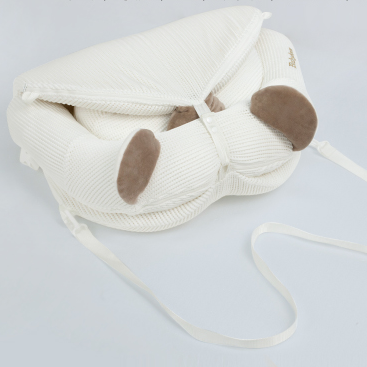


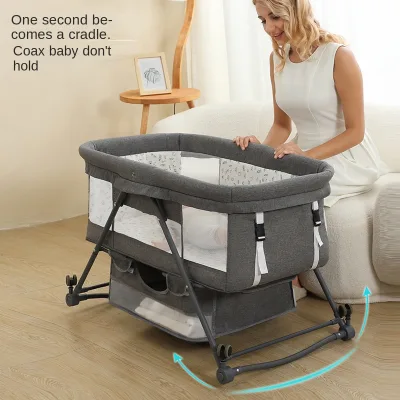


Comprehensive Sourcing Guide
Strategic Sourcing Guide for Portable Fold-Up Baby Cribs with Changing Stations
Understanding Product Specifications and Functional Variability
When sourcing a portable fold-up baby crib with a changing station, buyers must first navigate a complex landscape of technical specifications that vary significantly between manufacturers. The core keyword implies a dual-functionality unit that combines a sleeping environment for infants with an integrated or attachable changing surface. Based on observed market data, these units are constructed primarily from metal frames, which provide the necessary structural integrity for portability while maintaining safety standards. The material composition is critical; while metal frames are common, the bedding and surrounding fabric often utilize cotton or similar soft materials to ensure comfort and breathability for the newborn.
The physical dimensions of these cribs are not uniform. Observed product standards indicate a wide range of sizes, with some models measuring approximately 1206078cm, while others are designed as compact nests with inner sizes of 3068cm and outer dimensions of 5388cm. This variance suggests that buyers must clearly define their spatial requirements before engaging with suppliers. Some units are designed as multifunctional baby cribs with European styling, while others adopt a modern design aesthetic. A key functional attribute is the height adjustability; the market presents options ranging from fully adjustable models to fixed-height units. For a "fold-up" mechanism to be effective, the product must feature a disassembly capability that allows for compact storage, often utilizing a foldable design that reduces the footprint significantly when not in use.
The changing station component is often integrated into the design as a specific application feature. In some configurations, the crib serves as a baby playpen or a multifunctional bed that transitions into a changing area. The presence of a mosquito net is another variable specification; while some models include this as a standard feature, others do not. Buyers should verify if the changing station is a permanent structural part of the frame or an accessory that attaches to the side. The product model numbers, such as H25-A6, H27-E3, or nest-001, often encode specific dimensional or feature sets, making it essential to cross-reference model numbers with physical requirements rather than relying on generic descriptions.
Compliance and Certification Verification Protocols
Ensuring that a portable crib meets international safety and quality standards is the most critical step in the procurement process. The market data indicates that reputable suppliers often adhere to specific certification frameworks. Commonly observed certifications include ISO9000 for quality management and ISO14001 for environmental management. However, the presence of these certifications does not automatically guarantee product safety for infants; they indicate the manufacturer's operational standards.
For baby products, specific safety testing standards are paramount. The observed data references EN716, a standard relevant to the safety of baby cots and beds. Buyers must explicitly verify that the product under consideration has undergone testing according to EN716 or equivalent regional standards such as ASTM F1169 in the United States or EN 716 in Europe. Additionally, some listings mention CCC certification, which is a mandatory product certification system in China. While CCC is a strong indicator of compliance within the Chinese market, international buyers must ensure that the product also meets the specific safety regulations of their destination country.
It is vital to distinguish between general factory certifications and product-specific safety tests. A supplier may hold ISO9000 certification, but the specific crib model must have passed rigorous testing for structural stability, material toxicity, and entrapment hazards. The "Condition: New" attribute observed in listings confirms that the products are not refurbished, but this does not replace the need for independent third-party testing reports. Buyers should request the actual test reports for the specific model number (e.g., H46-A5R3) rather than accepting a general statement of compliance. The absence of specific test data in a supplier's initial pitch should be treated as a red flag requiring immediate clarification.
Cost Drivers and Pricing Structure Analysis
The pricing of portable fold-up baby cribs with changing stations is influenced by several distinct factors, leading to a broad observed price range in the market, typically spanning from $4.56 to $350 USD. This wide variance is not arbitrary but reflects differences in material quality, complexity of the folding mechanism, and the inclusion of additional features like changing stations or mosquito nets.
The primary cost driver is the material composition. Units constructed with high-grade metal frames and premium cotton fabrics will naturally command a higher price point compared to those using lighter alloys or synthetic blends. The complexity of the "fold-up" mechanism also impacts cost; a robust, tool-free folding system that ensures safety during assembly and disassembly requires more precise engineering and manufacturing, increasing the unit price. Furthermore, the integration of a changing station adds to the material and labor costs, as it requires additional structural support and potentially extra fabric or padding.
Minimum Order Quantity (MOQ) is another significant factor affecting the effective cost per unit. The market data shows an MOQ range from 1 to 500 units. Suppliers with lower MOQs, such as those accepting orders of 1 unit, often charge a premium per item to cover setup and logistics costs. Conversely, suppliers requiring an MOQ of 500 units, such as those associated with specific model numbers like rlft03, may offer more competitive unit pricing but require a larger capital outlay upfront. Buyers must balance their inventory needs with their budget constraints. For instance, a buyer seeking a single unit for testing or small-scale retail might pay closer to the upper end of the price spectrum, while a large-scale distributor negotiating for 500 units could access the lower price tiers.
Typical Applications and User Demographics
Understanding the intended application of the crib is essential for selecting the right product. The observed data highlights that these products are primarily designed for "Newborns" and are intended for use in "Home" or "Bedroom" environments. The "Multifunctional Baby Crib" and "Baby Multi-Functional Bed" classifications suggest that these units are versatile, serving not just as sleeping areas but also as playpens or changing stations.
The "For Ages" attribute often correlates with height adjustability. Adjustable models are suitable for growing infants, allowing the mattress height to be lowered as the baby becomes more mobile, preventing falls. Fixed-height models, labeled as "Unadjustable," are typically designed for specific age ranges or static use cases. The "European" and "Modern" style attributes indicate that these products are marketed towards consumers who value aesthetic integration with home decor, suggesting that the changing station is not just a functional add-on but a design element that should complement the bedroom environment.
The inclusion of a mosquito net in some models points to applications in regions where insect-borne diseases are a concern, or for outdoor use in controlled environments like patios. The "Folded" and "Disassembly" attributes are crucial for families with limited living space or those who travel frequently. These features allow the crib to be stored in a compact form, often within a provided carton or color box, making it ideal for apartment living or vacation homes. The application is strictly domestic, as indicated by the "Use: Home" attribute, distinguishing these products from commercial-grade nursery equipment.
Supplier Evaluation and Operational Due Diligence
Evaluating suppliers for portable baby cribs requires a rigorous approach to due diligence, focusing on origin, production capacity, and logistical capabilities. The majority of the observed products originate from China, with specific mentions of Zhejiang as a manufacturing hub. This regional concentration suggests a mature supply chain with specialized expertise in baby furniture. However, buyers must verify the specific factory location and capacity to ensure they are dealing with a legitimate manufacturer rather than a trading company with limited control over quality.
The "Customization" and "Customized" attributes indicate that many suppliers offer OEM or ODM services. Buyers should assess the extent of these customization options. Can the brand name be customized? Is the color (e.g., Grey, Blue, Multicolor) customizable? The ability to customize the product is a significant advantage for branding, but it often comes with higher MOQs and longer lead times. Buyers must clarify the customization process, including the timeline for sample approval and the cost implications of custom packaging, such as the "Color Box" or standard "Carton" options.
Logistical factors, such as the "mail_packing" attribute (marked as "Y" in some listings), suggest that some suppliers offer specialized packaging for shipping. This is crucial for preventing damage during transit, especially for foldable structures that rely on precise hinge mechanisms. Buyers should inquire about the packing details to ensure the product arrives in perfect condition. Additionally, the "Condition: New" attribute confirms that suppliers are delivering fresh inventory, but buyers should still verify the production date to ensure the product has not been sitting in a warehouse for an extended period, which could affect material integrity.
Quality Control and Long-Term Procurement Strategy
Implementing a robust quality control (QC) strategy is non-negotiable when sourcing baby products. Given the safety-critical nature of cribs, buyers should not rely solely on the supplier's internal QC. Instead, a third-party inspection protocol should be established before shipment. This inspection should verify the structural integrity of the metal frame, the stability of the folding mechanism, and the safety of the changing station attachment. The inspection must also confirm that the product matches the agreed-upon specifications, including dimensions (e.g., 1256572cm vs. 90*48), material composition (cotton vs. metal), and color accuracy.
Long-term procurement considerations involve building a sustainable relationship with suppliers who can maintain consistent quality and compliance. The observed data shows that some models have specific certifications like ISO9000 and ISO14001, which are good indicators of a supplier's commitment to quality and environmental responsibility. However, buyers should periodically audit these certifications to ensure they remain valid. Furthermore, the "MOQ: 500" requirement for certain models suggests that these suppliers may be better suited for large-scale contracts. Buyers planning for long-term growth should negotiate volume-based pricing tiers and ensure that the supplier has the capacity to scale production without compromising quality.
Finally, buyers should consider the after-sales support and warranty terms. Since these products involve mechanical parts like folding hinges and adjustable mechanisms, wear and tear is a potential issue. A clear warranty policy regarding the structural integrity and the functionality of the changing station is essential. By focusing on these technical, compliance, and operational aspects, buyers can mitigate risks and ensure a successful sourcing outcome for portable fold-up baby cribs with changing stations. The combination of verified specifications, rigorous certification checks, and strategic supplier evaluation forms the foundation of a reliable procurement strategy in this sensitive product category.
FAQs
What certifications do portable fold up baby cribs with changing station have?
These products often carry ISO9000 and ISO14001 certifications alongside EN716 safety testing standards. Some listings also include CCC certification for the Chinese market, ensuring quality management and environmental compliance.
Can I find adjustable height options for portable fold up baby cribs with changing station?
Yes, adjustable height models are available alongside fixed-height options. The market offers both height adjustable and unadjustable units, allowing buyers to select based on specific infant age requirements and nursery space constraints.
Which materials are used in portable fold up baby cribs with changing station?
Frames are typically constructed from metal for structural integrity, while bedding often uses cotton. Some models feature multicolor designs, and the material composition is verified through product specifications like metal frames and cotton fabrics.
How does the folding mechanism work for portable fold up baby cribs with changing station?
The cribs feature disassembly and folding capabilities for compact storage. Products are designed to be folded and disassembled, often arriving in cartons or color boxes to facilitate easy transport and space-saving storage in homes.
What is the minimum order quantity for portable fold up baby cribs with changing station?
Minimum order quantities range from one unit to five hundred units depending on the supplier. Specific models like rlft03 may require an MOQ of 500, while other suppliers accept smaller orders starting at one unit.
Where are portable fold up baby cribs with changing station manufactured?
Most products originate from China, with specific manufacturing hubs noted in Zhejiang. The origin is consistently listed as China, indicating a concentrated supply chain for these baby furniture items in that region.